
Frequently Asked Questions
Company Information
What is RS DYNAMICS’ corporate profile?
RS DYNAMICS is a global enterprise that develops advanced analytical and detection systems. They connect international scientists and research institutes to provide innovative solutions globally.
Where is RS DYNAMICS headquartered?
RS DYNAMICS is headquartered in Zug and Zurich, Switzerland. These locations serve as the central hub for their strategic management and global operations. In Prague, Czech Republic there is located research and service center.
How can I contact RS DYNAMICS?
You can contact RS DYNAMICS by sending a message through their website contact form or e-mail office@rsdynamics.com.
Products
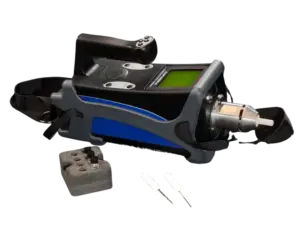 The EXPLONIX is a highly sensitive, portable, multi-functional explosives/radiological compounds detection and analytical system offering optimal power & flexibility for fast, reliable detection and identification of a wide range of explosive and radioactive material traces.
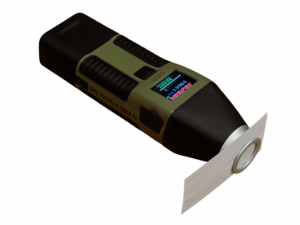
The miniEXPLONIX is a handheld explosive trace detector designed for rapid, compact, and reliable analysis. It is used primarily in security, customs, and military applications to detect explosive traces efficiently.
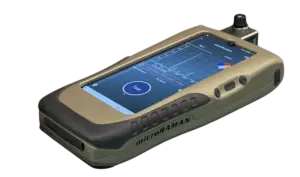
The microRAMAN spectrometer uses Raman spectroscopy to identify materials at the molecular level. It analyzes scattered light to provide detailed information about the chemical composition of a sample.
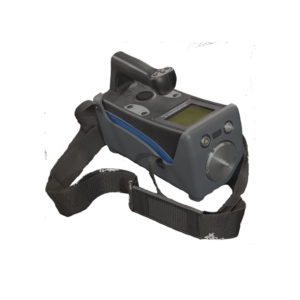
The ECOPROBE is designed for environmental monitoring, particularly in detecting and mapping hydrocarbon contamination. It offers fast, reliable detection and monitoring capabilities, crucial for safety and environmental security.
Applications
In which fields are RS DYNAMICS technologies applied?
General security applications
RS DYNAMICS technologies are applied in CBRNE, EOD, security, customs, and military fields. They provide solutions for detecting explosives, radioactivity, and chemical substances.
Environmental applications
Ensuring safety and environmental security at sites like closed coal mines and underground gas reservoirs
What role does RS DYNAMICS play in security applications?
RS DYNAMICS plays a crucial role in security applications by providing advanced detection systems for explosives and chemical threats. Their technologies are essential for customs, military, and other security operations.
How is the ECOPROBE used in environmental monitoring?
The ECOPROBE is used to map, delineate, and monitor hydrocarbon contamination and detect methane effluence. It is vital for ensuring safety and environmental security at sites like closed coal mines and underground gas reservoirs.
Comparisons
What is the difference between EXPLONIX and miniEXPLONIX?
Both devices target the same mission—fast explosives trace detection—but they differ mainly in form factor and deployment style. miniEXPLONIX is optimized for maximum portability, while EXPLONIX is typically selected for more detailed analysis and fixed or semi-fixed deployments.
miniEXPLONIX and EXPLONIX - General FAQ
What are miniEXPLONIX and EXPLONIX used for?
EXPLONIX and miniEXPLONIX are explosives trace detectors designed to help security teams screen for explosive residues on people, objects, and surfaces during routine checks or incident response.
What is the purpose of explosives trace detectors?
miniEXPLONIX and EXPLONIX are designed for explosive trace detection (ETD). ETD refers to the process of identifying microscopic residues or vapors of explosive materials. ETD systems detect either particulate traces left behind on surfaces or vapors released from explosive compounds. These traces are often invisible to the naked eye but can be highly informative for security screening, forensic analysis, or military applications.
Typical use cases include:
- entry screening at government buildings and critical infrastructure
- security checks at events and public venues
- inspections in transportation and logistics
- rapid checks during suspicious incident response
What types of explosives can be detected?
The devices are designed to detect trace-level residues associated with common explosive substances, including those relevant to security screening and IED-related threats.
Modern ETD systems can detect a wide range of commercial, military, and homemade explosives, including but not limited to:
TNT, RDX, PETN, and HMX
Ammonium nitrate-based mixtures
Nitroglycerin and nitrocellulose
TATP and HMTD (common homemade explosives)
Plastic explosives (e.g., Semtex, C4)
RS DYNAMICS instruments are optimized to detect both pure explosives and complex mixtures.
Do the devices identify a specific explosive compound?
Depending on configuration and operational mode, the device can provide actionable screening results that support decision-making on-site. For confirmatory identification and legal procedures, organizations may still follow internal protocols and escalation steps.
miniEXPLONIX is a fast screening device for detection of explosives traces without exact identification.
EXPLONIX is more capable detector/identifier. It can serve either as fast screening device or in analytical mode it can provide closer identification of basic explosives (TNT, PETN, RDX, HMX, NC).
How fast is one test?
Results are typically available within seconds after sampling, supporting rapid decisions during screening or inspections. In case of EXPLONIX analytical mode it takes approximately 1 min. (30s analysis + additional time for cleaning and getting ready).
What surfaces can be tested?
Common sampling surfaces include:
- hands and clothing
- bags, luggage, parcels
- plastic, metal, glass, paper/cardboard
- vehicle interior contact points
Can the detectors help detect IED threats?
miniEXPLONIX and EXPLONIX instruments support screening for trace residues that may be associated with explosive handling, preparation, or contact with suspicious items.
Are EXPLONIX/miniEXPLONIX difficult to operate?
They are designed for field use, with a workflow that supports operation by personnel with varying technical backgrounds after appropriate training. miniEXPLONIX is especially designed in terms of easy use and short training.
Can the devices be used outside or in demanding environments?
miniEXPLONIX and EXPLONIX are intended for mobile and field deployments, where durability and operational readiness matter.
What is included in delivery?
A standard package usually includes the detector, essential accessories, and documentation. Optional items may include training, spare consumables, and service plans.
What training is recommended?
Training typically covers:
- correct sampling technique
- operational workflow and interpretation
- contamination prevention
- response procedures after alarms
Can data be exported or integrated into external systems?
Depending on configuration, data export options can support reporting and integration workflows. RS DYNAMICS can advise on integration possibilities for your environment.
Does the system support evidence documentation or chain-of-custody?
Results can be logged and exported to support internal reporting. If formal chain-of-custody is required, it is usually implemented through the organization’s broader evidence handling procedures.
What are typical operating costs per test?
Cost per test depends mainly on consumables and operational workflow. This can be estimated based on your expected screening volume.
What consumables are required?
Typical consumables include sampling swabs/wipes, detector cartridges, filters and any device-specific consumable components. RS DYNAMICS can provide a recommended consumables list and expected usage rates.
Does the device require calibration or routine checks?
Routine verification and maintenance procedures are recommended to ensure consistent performance. Service intervals depend on usage intensity and operational environment.
What can cause false positives or false negatives?
As with any trace detection system, results can be influenced by:
- cross-contamination
- environmental background chemicals
- improper sampling technique
Operational procedures and training help reduce these risks.
What is the expected throughput for checkpoint screening?
Throughput depends on workflow setup, staffing, and sampling strategy. EXPLONIX is commonly used where more detailed analysis is needed, while miniEXPLONIX is ideal for rapid mobile checks.
How does sampling work?
Sampling is typically performed using swabs/wipes on hands, objects, or surfaces. The sample is then analyzed by the detector to provide a fast screening result.
What is the detection sensitivity (trace level)?
Sensitivity depends on the target substances, sampling quality, and environmental conditions. ETD devices are extremely sensitive, capable of detecting trace amounts in the nanogram or even picogram range. This means that even minuscule quantities of explosive residue – left behind on clothing, luggage, vehicles, or tools – can be identified. It is often possible to detect traces that have adhered to selected surfaces even after multiple trace transmissions.
What is the detection principle used by EXPLONIX/miniEXPLONIX?
Both systems are based on explosives trace detection (ETD) designed for rapid screening of explosive residues at the point of need. ETD typically involves collecting a sample (e.g. by swabbing a surface) and analyzing it using advanced and highle sensitive technologies such as chemiluminiscence, ion mobility spectrometry (IMS), mass spectrometry, under several contition also Raman spectroscopy. RS DYNAMICS uses the unique IRSSIL (Infra Red Sampled Selective Luminescense) technology.
Do RS DYNAMICS instruments suffer from contamination issues?
One of the common issues with traditional explosive trace detection systems – especially those using ion mobility spectrometry (IMS)—is internal contamination. These systems often trap microscopic residues of explosives inside their sampling paths, drift tubes, or filters. Over time, this leads to false positives, reduced accuracy, and the need for frequent, often complex cleaning and recalibration.
RS DYNAMICS devices are specifically engineered to avoid these problems. Thanks to their advanced high temperature design, explosive particles do not accumulate inside the instrument. There’s no need to disassemble or decontaminate the system between scans or during longterm usage.
This makes RS DYNAMICS devices especially reliable for field operations, where speed, repeatability, and low maintenance costs are crucial. Users can perform repeated measurements without any risk from contamination even under high expositions of highly volatiles compounds.
Do the devices store test results?
Obtained results can be stored for documentation and reporting, depending on the device setup and user requirements. Users can download stored data to connected PC in tabular form.
What happens after a positive alarm?
A positive result typically triggers site-specific procedures, such as secondary screening, isolation of the item, or escalation to specialist units—depending on the organization’s protocol.
microRAMAN - General FAQ
What is microRAMAN?
microRAMAN is a handheld Raman spectrometer designed for rapid, non-destructive identification of chemical substances including explosives, narcotics, hazardous materials, and industrial compounds.
How does Raman spectroscopy work in microRAMAN?
microRAMAN uses laser excitation to measure molecular vibrational fingerprints. The scattered light is analyzed to identify substances by comparing spectral signatures with an internal database.
Is microRAMAN better than laboratory Raman systems?
Laboratory Raman systems may offer higher resolution, but microRAMAN provides portability and field deployment capability with rapid identification.
microRAMAN vs XRF?
XRF identifies elemental composition, while microRAMAN identifies molecular structure. They provide different but complementary analytical information.
How does microRAMAN compare to FTIR?
“microRAMAN excels in through-container analysis and aqueous samples, while FTIR is better for bulk organic materials. They are often complementary techniques.
Is Raman spectroscopy safe for operators?
microRAMAN uses low-power laser radiation within safety standards when operated according to manufacturer guidelines.
Does microRAMAN require calibration?
Periodic calibration is recommended to ensure spectral accuracy and maintain library matching performance over time.
How long does a measurement take?
Most measurements take between 1–10 seconds depending on material complexity and signal quality requirements.
How is microRAMAN used in customs control?
Customs officers use microRAMAN for fast identification of suspicious powders, tablets, and liquids during border inspections.
Is microRAMAN used in forensic investigations?
It is used in forensic science for trace evidence analysis, substance identification, and crime scene screening.
Is microRAMAN suitable for unknown chemical spills?
It provides rapid preliminary identification of unknown materials, helping responders assess risk before handling or transport.
Can microRAMAN identify hazardous chemicals?
It is widely used for identifying hazardous industrial chemicals, oxidizers, acids, and toxic substances in field environments.
Does packaging affect narcotics detection?
microRAMAN can often analyze substances through transparent or semi-transparent packaging, reducing the need for direct handling.
Can microRAMAN identify narcotics?
It can identify common narcotics such as cocaine, heroin, methamphetamine, MDMA, and synthetic cannabinoids using spectral matching.
Is microRAMAN safe for screening unknown explosives?
Raman spectroscopy is non-destructive and uses low-power laser excitation, making it suitable for safe preliminary identification of unknown substances.
What types of explosives can be identified?
Typical detected materials include TNT, RDX, PETN, HMX, ANFO, and peroxide-based explosives, depending on the spectral library configuration.
Can microRAMAN detect explosives?
microRAMAN is capable of identifying a wide range of military and commercial explosives by analyzing their molecular spectra in seconds without direct contact.
ECOPROBE - General FAQ
Can we request a demo or on-site evaluation?
RS DYNAMICS can provide demonstrations and evaluation support to validate fit for your site conditions and survey objectives.
Technical notes:
A demo is most useful when you define your target contamination types, site conditions, and expected output format (report/GIS).Can ECOPROBE 5 be used for regulatory and compliance work?
It supports environmental assessments by providing structured field data, but final compliance reporting may require lab confirmation depending on regulations.
Technical notes:
Many agencies accept field screening as part of the investigation process when properly documented.What training is recommended?
Training usually covers field workflow, consistent measurement technique, result interpretation, and documentation practices.
Technical notes:
Short training plus a supervised first deployment is often enough to achieve reliable routine use.What consumables are required?
Some survey workflows require consumables depending on sampling approach and site conditions. This varies by project.
Technical notes:
RS DYNAMICS can help estimate consumable usage based on expected daily measurement volume.What maintenance is required?
Maintenance is typically straightforward and focused on proper handling, cleaning, and periodic service checks.
Technical notes:
Field kits and correct storage help extend instrument lifetime and reduce downtime.Does ECOPROBE 5 require calibration or routine checks?
Routine checks and recommended maintenance procedures help ensure consistent operation. Calibration needs depend on use intensity and project requirements.
Technical notes:
RS DYNAMICS can provide recommended verification procedures for your team’s workflow.What are typical limitations of field screening?
Field screening can be limited by soil heterogeneity, mixed contamination sources, and variable environmental conditions. Some cases require confirmatory lab work.
Technical notes:
Best practice is using ECOPROBE 5 to guide decisions, then validating with targeted laboratory sampling.Does ECOPROBE 5 support georeferenced measurements (GPS)?
Many modern survey workflows rely on GPS tagging. Availability depends on system setup and how your team collects location data.
Technical notes:
Even without integrated GPS, coordinates can be logged externally and paired with results for mapping.Can ECOPROBE 5 be used for remediation monitoring?
ECOPROBE 5 can support progress tracking during excavation or remediation, helping verify cleanup boundaries and confirm where follow-up is needed.
Technical notes:
It is especially useful for fast checks between excavation steps.Can ECOPROBE 5 reduce the number of lab samples needed?
In many projects, yes. It can help teams to identify where lab sampling is most valuable and where results are consistently low.
Technical notes:
This approach supports cost-effective surveys while maintaining defensible reporting workflows.How many measurement points can be completed per day?
That depends on site size, terrain, and workflow. ECOPROBE 5 supports high point density surveys compared to lab-only approaches.
Technical notes:
A well-planned survey grid and trained operators significantly increase throughput.Is ECOPROBE 5 better for screening or detailed investigation?
It can support both, but it is most commonly used for screening and survey optimization, especially during early-stage site assessments.
Technical notes:
For detailed investigations, it complements drilling, sampling, and laboratory confirmation rather than replacing them.Can ECOPROBE 5 be used in harsh outdoor conditions?
ECOPROBE 5 is designed for field deployments and practical use in real site environments.
Technical notes:
Operating limits (temperature, humidity, dust exposure) should follow RS DYNAMICS recommendations for best performance.What affects measurement reliability?
Soil surveys can be influenced by soil type, moisture, temperature, and site heterogeneity. Following correct field procedures improves repeatability.
Technical notes:
Field screening is most effective when combined with consistent sampling depth, standardized point spacing, and clean handling practices.Can results be exported for reporting?
Results can be used for field reports and documentation, and may be exported depending on project workflow and system configuration.
Technical notes:
Many users combine ECOPROBE 5 outputs with GIS tools or site drawings to create clear contamination maps.Can ECOPROBE 5 help map contamination plumes or hotspots?
ECOPROBE 5 supports structured surveys that can be used to map relative contamination patterns across a site.
Technical notes:
Best results come from a defined grid or transect approach and consistent measurement procedure.How fast are results available?
Results are available directly on-site, allowing teams to adapt the survey plan in real time.
Technical notes:
Speed depends on the field workflow, number of points, and site conditions.How is ECOPROBE 5 used in the field?
A typical workflow includes measurement at multiple points across a site, comparison of results, and targeted follow-up where elevated values appear.
Technical notes:
Many teams use it to guide where to take soil cores, confirm excavation limits, or prioritize laboratory samples.How does ECOPROBE 5 improve a soil survey workflow?
It helps teams find contamination hotspots faster, refine survey boundaries, and reduce unnecessary sampling by supporting better on-site decisions.
Technical notes:
This can reduce project time and cost while improving site understanding.Is ECOPROBE 5 a replacement for laboratory analysis?
ECOPROBE 5 is typically used for rapid field screening and decision support. Laboratory analysis may still be required for confirmatory results, regulatory reporting, or legal documentation.
Technical notes:
Its main value is improving sampling efficiency and focusing lab testing on the most relevant locations.What does ECOPROBE 5 detect or measure?
ECOPROBE 5 supports assessment of soil contamination indicators relevant to environmental surveys and site screening. The exact targets depend on configuration and project requirements.
Technical notes:
For compliance-driven projects, field screening is often combined with lab confirmation for final reporting.Who typically uses ECOPROBE 5?
ECOPROBE 5 is used by environmental consultants, remediation contractors, municipalities, and regulatory or oversight teams involved in soil and site assessments.
Technical notes:
Also applicable for owners/operators who need quick site verification during construction or decommissioning.What types of sites is ECOPROBE 5 suitable for?
ECOPROBE 5 is used by environmental consultants, remediation contractors, municipalities, and regulatory or oversight teams involved in soil and site assessments.
Technical notes:
Also applicable for owners/operators who need quick site verification during construction or decommissioning.What is ECOPROBE 5 used for?
ECOPROBE 5 is a field instrument designed to support rapid soil contamination surveys. It helps teams screen and assess contamination on-site, identify hotspots, and optimize sampling strategies.
Technical notes:
Often used to reduce delays between fieldwork and decisions by providing fast, repeatable measurements across multiple points.