
What Is a Raman Spectroscopy?
Raman technology in modern world
A handheld Raman spectrometer is a compact and portable analytical instrument designed to identify and characterize materials based on their molecular composition. Unlike traditional laboratory Raman spectrometers, which are large, therefore stationary, and require controlled environments. On the other hand, handheld Raman devices are engineered for on-site, real-time analysis. Therefore, they are small enough to be carried in one hand, battery-powered, and ruggedized for use outside laboratory conditions.
Analytical capabilities complemented by today's features
At its core, the device provides a chemical fingerprint of a substance without destroying or altering the sample. This makes it particularly valuable in situations where rapid identification, safety, or sample preservation is critical. Moreover, modern handheld Raman spectroscopes often include integrated touchscreens, onboard spectral libraries, wireless connectivity, and automated analysis software, allowing non-expert users to obtain reliable results quickly.
How Does a Handheld Raman Spectroscope Work?
The operation of a handheld Raman spectrometer is based on the principle of Raman scattering, which is a phenomenon discovered in 1928 by C. V. Raman. The process works as follows:
Laser Illumination
The device emits a monochromatic laser (commonly in the near-infrared range, such as 785 nm) onto the sample.
Light-Molecule Interaction
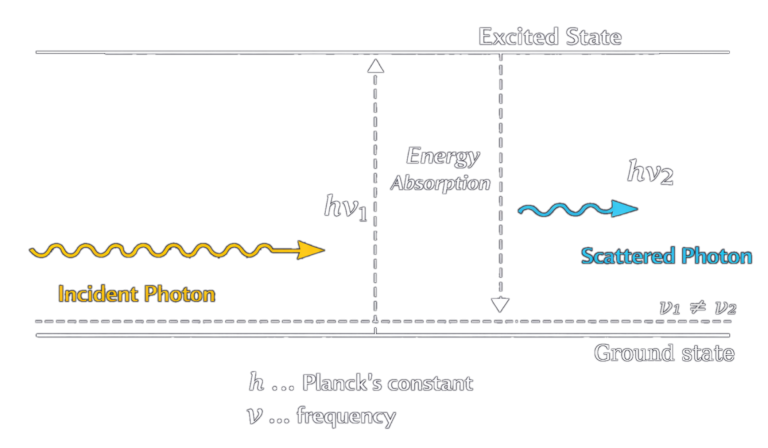
When photons of the laser light interacts with the molecules in the sample, most of the light is scattered elastically (Rayleigh scattering). However, a very small fraction of the light is scattered inelastically, meaning its energy changes due to molecular vibrations.
Raman Signal Collection
This energy-shifted light—the Raman signal—contains information about the vibrational modes of the molecules, which are unique to specific chemical bonds and molecular structures.
Spectral Analysis
The instrument collects the scattered light and converts it into a Raman spectrum. This spectrum is then compared to reference spectra stored in an internal library.
Material Identification
Within seconds, the device identifies the material, often displaying the compound name, confidence level, and additional chemical information.
Who Can Use a Handheld Raman Spectroscope?
One of the major advantages of handheld Raman technology is its accessibility. While traditional spectroscopic techniques require trained scientists, handheld Raman devices are designed for a wide range of users, including:
- First responders (firefighters, hazmat teams, police)
- Customs and border control officers
- Pharmaceutical inspectors
- Quality control technicians
- Forensic investigators
- Environmental monitoring personnel
- Field scientists and researchers
With intuitive interfaces and automated interpretation, users often need only minimal training to operate the device effectively, for instance. Above all, it makes it suitable for both experts and non-specialists.
Where Can It Be Used?
Handheld Raman spectroscopes are specifically designed for field deployment. For example, they can be used in locations where traditional laboratory equipment is impractical or impossible. Typical environments include, for instance:
- Crime scenes
- Military and defense settings
- Airports and border checkpoints
- Manufacturing floors
- Warehouses and distribution centers
- Hospitals and pharmacies
- Remote field sites (mines, forests, disaster zones)
Moreover, their durability allows them to function in challenging conditions such as dust, vibration, temperature fluctuations, and humidity.

Why Was Raman Spectroscopy Invented?
Immediate Decision-Making
Many real-world situations such as hazardous material identification or counterfeit drug detection-require instant answers, not lab turnaround times.
Safety
Handling unknown substances can be dangerous. Raman spectroscopy enables non-contact and non-destructive analysis, often through sealed containers.
Portability and Accessibility
Scientists and inspectors needed laboratory-quality chemical analysis in the field, without transporting samples or setting up complex equipment.
Cost and Efficiency
Reducing reliance on centralized laboratories lowers operational costs and speeds up workflows.
Cost and Efficiency
Reducing reliance on centralized laboratories lowers operational costs and speeds up workflows.
Technological Advancements
Advances in lasers, detectors, batteries, and data processing made it possible to miniaturize Raman systems without sacrificing performance.
Applications of Raman Spectroscopy
Their durability allows them to function in challenging conditions such as dust, vibration, temperature fluctuations, and humidity.
Pharmaceuticals
- Verification of raw materials
- Detection of counterfeit or substandard drugs
- Quality control during manufacturing
Security and Law Enforcement
- Identification of explosives, narcotics, and toxic substances
- Analysis of suspicious powders or liquids
- Forensic evidence examination
Chemical and Industrial Manufacturing
- Incoming material inspection
- Process verification
- Detection of contamination or mix-ups
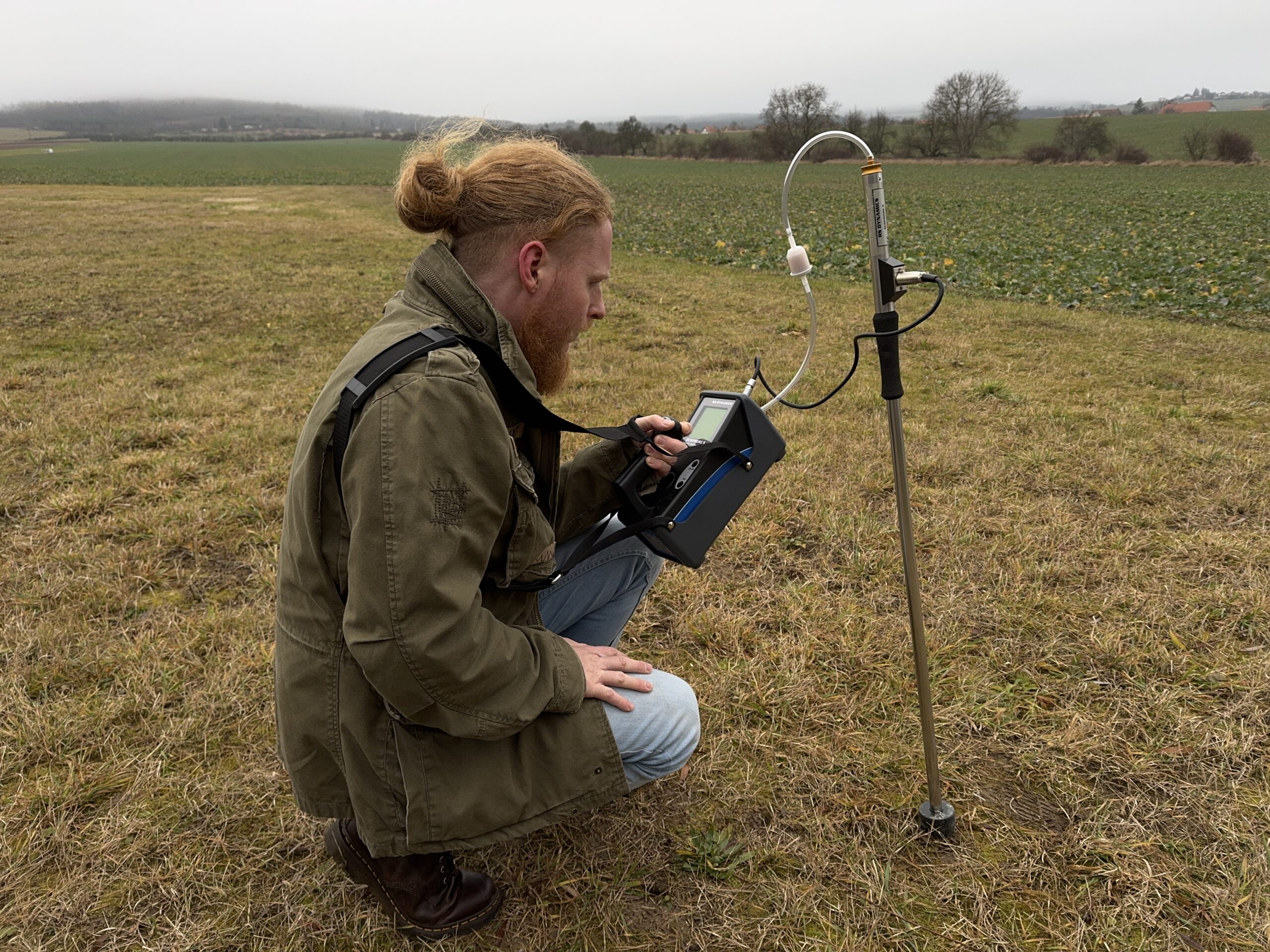
Environmental Monitoring
- Identification of pollutants
- Analysis of microplastics
- Field testing of soil and water samples
Environmental Monitoring
- Identification of pollutants
- Analysis of microplastics
- Field testing of soil and water samples
Food and Agriculture
- Detection of adulterants
- Verification of food authenticity
- Analysis of fertilizers and pesticides
Education and Research
- Field-based chemical studies
- Teaching spectroscopy concepts outside the lab
- Rapid screening before detailed laboratory analysis
Conclusion
The Raman spectroscopy represents a significant technological advancement in chemical analysis, which brings powerful molecular identification capabilities out of the laboratory and into the real world. In addition, it combines portability, safety, speed, and accuracy. Moreover, it enables informed decision-making across industries ranging from security and healthcare to manufacturing and environmental science. In conclusion, Its invention reflects a growing demand for instant, reliable information at the point of need, and its continued development promises even broader applications in the future.